

Trusting God’s Plan in Every Situation
Life is full of unexpected events. Sometimes we experience happiness, success, and answered prayers. At other times, we face disappointment, failure, sickness, financial difficulties, family problems, and unanswered questions. In such moments, we may wonder, “Why is this happening to me? Has God forgotten me? Why is He allowing these difficulties in my life?”
The Bible gives us a powerful promise in Romans 8:28: “All things work together for good to them that love God.”
This verse does not mean that everything that happens in our lives is good. Rather, it assures us that God is able to work through every circumstance, including our painful experiences, to accomplish His purposes in us.
God’s plan is beneficial, active, inclusive, and harmonious. Even when we cannot understand what He is doing, we can trust His wisdom, His timing, and His unfailing love.
Let us explore the spiritual lessons found in this wonderful promise.
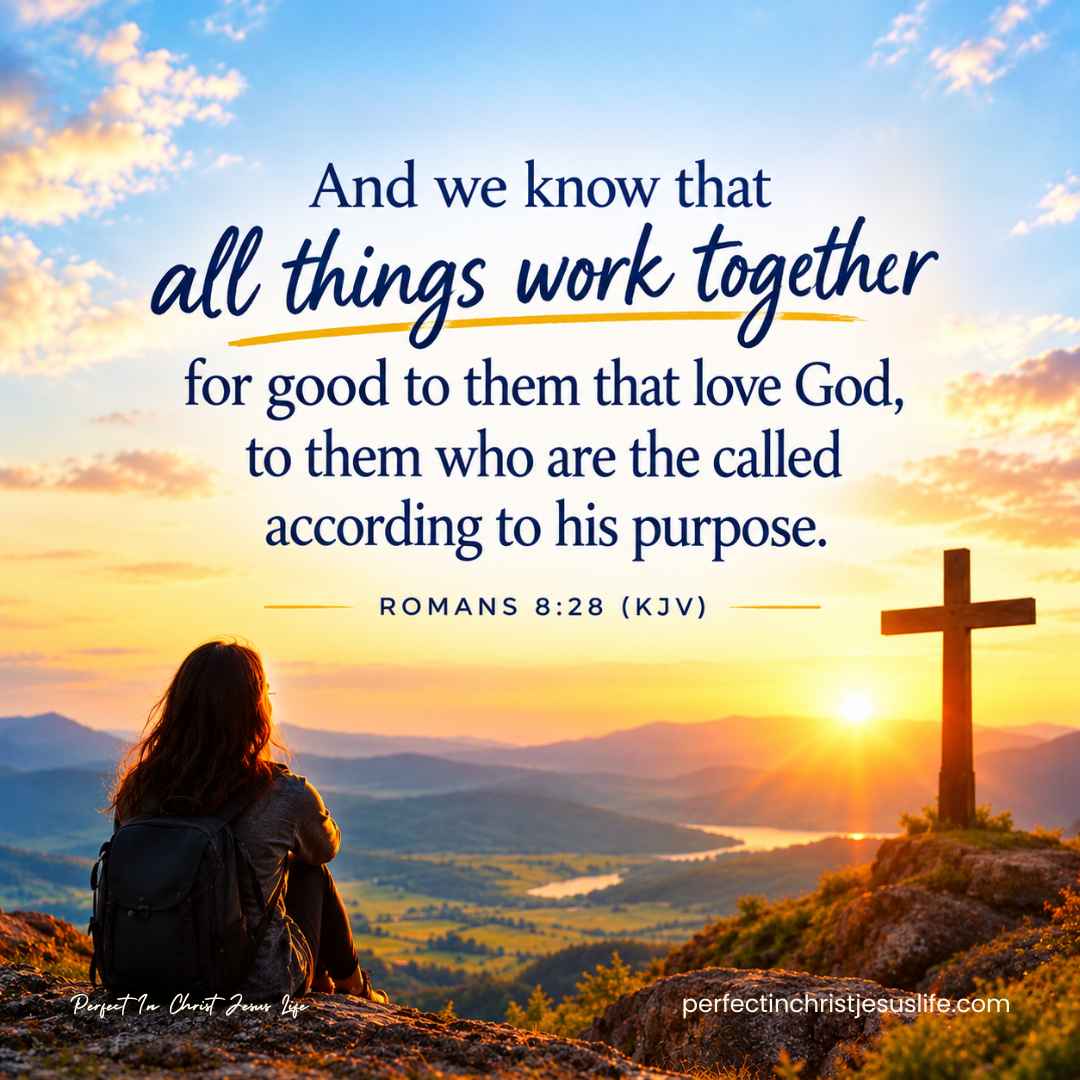
And we know that all things work together for good to them that love God, to them who are the called according to his purpose. Romans 8:28 (KJV)
1. Understanding the Nature of God’s Plan
God’s plan for His children reveals four important characteristics: it is beneficial, active, inclusive, and harmonious.
God’s Plan Is Beneficial
God desires to accomplish His good purposes in the lives of those who love Him. Although we may not always understand His methods, we can trust that His wisdom is greater than ours.
Sometimes, what appears to be a setback may become an opportunity for spiritual growth. A closed door may lead us to a better direction. A disappointment may teach us patience, humility, and dependence on God.
We often measure goodness by our immediate happiness, material possessions, or worldly success. God, however, sees the bigger picture. He knows what will help us grow in faith and become more like Christ.
A situation that brings us temporary sorrow may eventually produce lasting spiritual fruit.
God’s Plan Is Active
God’s plan is not inactive or powerless. He continues to work in our lives, even when we cannot see the results.
There may be seasons when our prayers seem unanswered and our circumstances remain unchanged. Yet, the absence of visible progress does not mean that God has abandoned us.
Consider Joseph, who was betrayed by his brothers, sold into slavery, and imprisoned despite his innocence. His circumstances appeared to move him further away from his dreams. Nevertheless, God worked through his difficult journey and eventually placed him in a position where he could save many lives.
Joseph later told his brothers:
“But as for you, ye thought evil against me; but God meant it unto good.” — Genesis 50:20 (KJV)
Joseph’s story reminds us that God can bring good out of situations that others intend for evil.
God’s Plan Is Inclusive
Romans 8:28 begins with the words, “All things work together for good.”
The word all reminds us that God can work through many different circumstances in our lives. Our successes, disappointments, waiting seasons, failures, and unexpected changes can all become opportunities for His work.
Sometimes, we understand only one small part of our journey. We see today’s problem but cannot see tomorrow’s possibilities.
God sees the entire picture.
What we consider an isolated failure may become a lesson that prepares us for a future responsibility. What we perceive as a loss may teach us to value eternal things above temporary possessions.
This does not mean that every painful experience is good in itself. It means that no circumstance is beyond God’s ability to redeem and use for His purposes.
God’s Plan Is Harmonious
The promise does not simply say that all things are good individually. It says that all things work together for good.
Imagine looking at a single piece of a puzzle. It may appear meaningless, and you may not understand where it belongs. But when the pieces are assembled, they reveal a complete picture.
In the same way, some events in our lives may seem confusing when viewed separately. Only later might we begin to understand how different experiences shaped our character, strengthened our faith, or prepared us for a new season.
We must therefore be careful not to judge our entire lives by one painful moment.
God sees the whole picture, even when we can see only one piece.
2. Understanding Good and Evil from a Spiritual Perspective
Our understanding of goodness is often influenced by the world around us.
The world may define a successful life by wealth, education, social status, career advancement, and personal achievements. According to these standards, failure and loss are often considered signs of a bad outcome.
However, the Bible teaches us to look beyond outward circumstances.
Something that appears to be a failure in the eyes of the world may become a valuable lesson in the hands of God.
For example, imagine a student who fails an examination. The student may feel ashamed and believe that the failure has destroyed their future. Yet, the experience may reveal weaknesses in preparation, encourage greater discipline, and teach the student perseverance.
The failure itself is disappointing, but the lessons learned through it may contribute to future growth.
Similarly, a person who experiences a professional setback may discover that their identity has become too closely connected to their position. The experience may help them develop humility and recognize that their worth is not determined by their occupation.
This is an important spiritual principle:
Not everything that feels good produces lasting good, and not everything that feels painful is without purpose.
We should not automatically label every difficult experience as a blessing, nor should we ignore genuine suffering. Instead, we can ask God to help us respond to our circumstances with wisdom, faith, and a willingness to grow.
3. Learning from Failure: When Pride Is Broken
Failure can be painful because it often challenges our pride.
When we succeed, we may feel confident in our abilities. But when we fail, we are reminded of our limitations.
A failed examination, a rejected application, a lost opportunity, or a disappointed expectation can make us feel inadequate.
Yet failure does not have to define us.
It can become an opportunity to examine our lives honestly, identify our weaknesses, and make necessary changes.
Consider a student who fails an examination. Instead of giving up, the student can review the mistakes, improve study habits, seek guidance, and prepare more effectively for the next opportunity.
The failure then becomes part of the learning process rather than the end of the journey.
The same principle applies to our spiritual lives. God can use difficult experiences to teach us patience, dependence on Him, and compassion for others who are struggling.
The apostle Paul wrote:
“For when I am weak, then am I strong.” — 2 Corinthians 12:10 (KJV)
Recognizing our weakness can help us depend more fully on God’s strength.
However, we must remember that our failures do not determine our value, and our struggles are not evidence that God has rejected us.
When we fall, we can seek His forgiveness, receive His grace, learn from our mistakes, and continue moving forward.
4. Spiritual Growth Through Loss
One of the most challenging experiences in life is losing something we deeply value.
It may be money, employment, a relationship, good health, social standing, or a long-awaited opportunity.
When such losses occur, we may feel that our lives have been reduced to nothing.
Yet, difficult seasons can sometimes help us discover what matters most.
Imagine a person who once possessed considerable wealth and enjoyed a comfortable lifestyle. After experiencing a major financial loss, the person begins searching for deeper meaning and eventually develops a stronger relationship with Jesus Christ.
Although the person has lost material possessions, they may have gained a renewed understanding of faith, contentment, and eternal hope.
This does not mean that poverty is automatically good or that financial loss should be celebrated. Financial hardship can cause genuine suffering and requires practical support, wisdom, and compassion.
Rather, the lesson is that our possessions do not have to determine the depth of our relationship with God.
Jesus taught:
“For what is a man profited, if he shall gain the whole world, and lose his own soul?” — Matthew 16:26 (KJV)
Worldly achievements are temporary, but our relationship with God has eternal significance.
We should therefore pursue our responsibilities faithfully while remembering that our ultimate security is not found in wealth, status, or human approval.
Sometimes, the loss of something temporary can lead us to reconsider what is truly valuable.
5. Discovering Hidden Goodness in Difficult Circumstances
When we understand Romans 8:28, we may begin to approach our difficulties with a different attitude.
Instead of immediately asking, “Why is this happening to me?” we can also ask:
- What can I learn from this experience?
- How can I grow in faith during this season?
- Is there a weakness in my life that needs attention?
- How can I respond to this situation with wisdom and patience?
- How can God use my experience to help someone else?
These questions do not deny our pain. They help us face it with hope.
Consider a family caring for a child with a disability. Such a family may experience emotional, financial, and practical challenges. They may need additional resources, medical care, educational support, and encouragement.
It would be insensitive to suggest that their difficulties are easy or that they should not grieve.
Yet, through love, perseverance, community support, and faith, families can also discover deep relationships, greater compassion, and a renewed appreciation for each person’s dignity.
Every human being has worth because they are created in the image of God (Genesis 1:27). A person’s value is not determined by physical ability, intellectual ability, achievements, or independence.
We must never use the promise of Romans 8:28 to blame people for their suffering or to suggest that they must be happy about their pain.
Instead, we should stand beside those who suffer and help them experience the love of Christ.
God’s goodness is sometimes revealed not through the removal of every difficulty, but through His sustaining grace, the love of His people, and the hope He gives in the midst of suffering.
6. The Story of Nick Vujicic: A Life That Inspires Others
Nick Vujicic, a Christian speaker born without arms and legs, is widely known for sharing a message of hope, faith, and perseverance.
His life illustrates how a person can inspire others while living with circumstances that many people would find difficult to imagine.
Growing up with a physical disability presented significant emotional and practical challenges. Like many people facing painful circumstances, he had to wrestle with questions about his identity, purpose, and future.
Imagine being told that every human being is created in the image of God while struggling to understand how that truth applies to your own life.
Such a question can be deeply personal.
Yet, the biblical truth remains unchanged: human dignity does not depend on physical completeness or outward appearance.
Being created in God’s image is not a statement that every person must possess the same physical characteristics. It speaks to the dignity and value God gives to humanity.
As Nick’s life and public ministry developed, his experiences became part of a message that encouraged people around the world to face their struggles with courage and hope.
His story reminds us that a person’s circumstances do not have to prevent them from making a meaningful contribution to others.
However, we should not assume that every person with a disability must become an inspirational speaker or that their suffering exists primarily to teach others a lesson. People with disabilities deserve dignity, accessibility, inclusion, and opportunities to live fulfilling lives.
The spiritual lesson is broader than any single person’s story:
Our limitations do not cancel our worth, and our struggles do not place us beyond God’s love or purpose.
We may not understand why certain difficulties have entered our lives. Nevertheless, we can seek God’s guidance and discover meaningful ways to serve others within our circumstances.
7. Manifesting God’s Power Through Our Weakness
The Bible repeatedly reminds us that God’s power is not limited by human weakness.
The apostle Paul received a profound answer from the Lord concerning his own struggle:
“My grace is sufficient for thee: for my strength is made perfect in weakness.” — 2 Corinthians 12:9 (KJV)
Paul then responded:
“Most gladly therefore will I rather glory in my infirmities, that the power of Christ may rest upon me.” — 2 Corinthians 12:9 (KJV)
These words teach us that we do not need to appear perfect to experience God’s grace.
Our weaknesses may remind us to depend on Him rather than relying entirely on our own abilities.
A person who has experienced failure may encourage others who feel hopeless. Someone who has endured grief may offer compassion to another grieving person. A person who has struggled with fear may eventually help others face their own fears.
God can use our experiences to develop empathy, patience, courage, and a deeper understanding of His grace.
This does not mean that we must remain in harmful situations or refuse help in order to demonstrate faith. Seeking medical treatment, professional guidance, practical assistance, and emotional support can be wise and appropriate.
The power of God is not demonstrated only through extraordinary achievements. It can also be seen in ordinary acts of faithfulness, love, forgiveness, and perseverance.
8. A Testimony of Gratitude: Choosing to Praise God
Imagine two people facing difficult circumstances.
One person responds with bitterness and concludes that life has no meaning because everything has gone wrong.
The other person acknowledges the pain but continues to seek God, trusting that their circumstances do not define the whole story.
The second person is not necessarily experiencing less suffering. Their difference lies in the hope they choose to hold.
Gratitude does not mean pretending that everything is fine. It means recognizing that even in difficult seasons, there may still be reasons to thank God.
We can thank Him for His presence, for the people who support us, for the strength to face another day, and for the hope found in Jesus Christ.
In the story of Nick Vujicic, his public testimony and message of faith illustrate how a person can speak about the goodness of Jesus while acknowledging significant personal challenges.
Such a testimony may encourage others to reconsider their own assumptions about happiness, purpose, and faith.
A person who praises God during hardship may prompt others to ask an important question: What gives this person hope when life is difficult?
Our gratitude can become a witness to the faithfulness of God.
The apostle Paul wrote:
“In every thing give thanks: for this is the will of God in Christ Jesus concerning you.” — 1 Thessalonians 5:18 (KJV)
Notice that the verse says to give thanks in everything, not necessarily for everything.
We do not have to be thankful for injustice, abuse, sickness, or tragedy as though these things were good in themselves. We can acknowledge the pain while remaining thankful that God is present and that hope is still possible.
Praise becomes especially meaningful when it arises from genuine trust rather than the denial of suffering.
9. All Things Work Together: Seeing the Bigger Picture
One of the most important words in Romans 8:28 is together.
Sometimes, we judge an entire season of life by one isolated incident.
A person loses a job and concludes that their future is ruined. Another person experiences rejection and assumes that they are unworthy of love. Someone else faces a delay and believes that their prayers have been ignored.
But life is larger than any single moment.
An experience that appears disastrous today may eventually become part of a journey that teaches us important lessons, opens unexpected opportunities, or changes our priorities.
This does not mean that every loss will be followed by a visible reward or that every painful event will eventually make sense to us.
Some questions may remain unanswered. Some losses may continue to hurt. Some consequences may require years of healing.
Nevertheless, our hope rests in the character of God, not in our ability to predict the future.
Romans 8:28 reminds us that God is able to work through the many parts of our lives to accomplish His purposes.
When we look back over our journey, we may begin to recognize how certain experiences shaped us in ways we could not have understood at the time.
A disappointment taught us patience. A failure taught us humility. A difficult relationship revealed the importance of healthy boundaries. A season of uncertainty strengthened our prayer life.
We may not always see such outcomes immediately, but we can continue to trust God while taking wise steps forward.
Never allow one painful chapter to convince you that the whole story has no hope.
10. Loving God and Trusting Him in Difficult Times
Romans 8:28 contains an important qualification:
“To them that love God.”
The promise is not presented as a guarantee that every believer will enjoy an easy life. Instead, it offers assurance to those who belong to God and are called according to His purpose.
Loving God does not mean that we never experience doubt, sorrow, fear, or frustration.
The Psalms show us that faithful people sometimes cry out to God with difficult questions. Biblical faith is not the absence of emotion; it is the decision to continue turning toward God even when our emotions are unsettled.
Consider Jacob’s life.
Jacob experienced family conflict, separation from his homeland, deception, and years of uncertainty. His journey was far from easy.
Yet, God remained involved in his story and continued to work through his circumstances.
When Joseph’s brothers later faced the consequences of their actions, Joseph recognized that God had worked through events intended for evil to preserve many lives (Genesis 50:20).
The story of Jacob’s family reminds us that God’s purposes can extend beyond what any one person understands at a particular moment.
When we face difficulties, we can remember God’s past faithfulness and ask Him for strength to trust Him today.
Instead of demanding that every question be answered before we follow Him, we can pray:
“Lord, I do not understand everything that is happening, but help me to remain faithful. Give me wisdom for the decisions I must make and peace for the things I cannot control.”
Faith does not require us to understand every detail of God’s plan.
It invites us to trust His character while continuing to walk with Him.
11. The Lesson of the Rock: God May Be Working on Us
Consider a familiar illustrative story about a man who was instructed by God to push a large rock up a mountain.
Every day, the man went to the rock and pushed with all his strength.
He pushed in the morning. He pushed in the evening. He continued for months, but the rock never moved.
After a year of effort, he became frustrated.
“Lord,” he complained, “I have obeyed You every day. I have used all my strength, but the rock has not moved even an inch. Why do You continue asking me to do something that produces no results?”
The Lord, in the story, responded by asking the man to examine himself.
The man’s arms had grown stronger. His legs had become more powerful. His endurance had increased, and his determination had deepened.
The task had not moved the rock, but it had changed the man.
The lesson is simple: sometimes, we focus so much on the result we want that we overlook the growth taking place within us.
We pray for an immediate answer, but the answer does not come when we expect it.
We ask God to remove an obstacle, but the obstacle remains.
We want our circumstances to change, yet we may need to develop patience, courage, wisdom, or perseverance while we wait.
This story is an illustration rather than a biblical account, but it offers a useful reflection on spiritual growth.
James writes:
“Knowing this, that the trying of your faith worketh patience.” — James 1:3 (KJV)
Trials can develop perseverance, although this does not mean that every hardship is sent by God specifically to teach us a lesson.
The important point is that we can ask God to help us grow through what we face.
Perhaps the situation has not changed yet, but you have become more patient.
Perhaps the opportunity has not arrived, but you have developed new skills.
Perhaps the answer remains unclear, but your relationship with God has deepened.
Do not measure every season only by what has changed around you. Also consider what God may be developing within you.
12. Walking Closely With God: Learning to Live With Unanswered Questions
One of the greatest challenges of faith is accepting that we will not understand everything.
We naturally want explanations.
Why did this happen? Why did God allow it? Why has the answer been delayed? Why did someone else receive what we have prayed for?
These questions can become especially painful when we experience prolonged unemployment, family difficulties, sickness, or disappointment.
It is not wrong to ask God honest questions. Scripture contains many prayers in which God’s people express confusion, grief, and longing.
However, we must recognize that our understanding is limited.
The prophet Isaiah records God’s words:
“For my thoughts are not your thoughts, neither are your ways my ways, saith the LORD.” — Isaiah 55:8 (KJV)
The following verse reminds us that God’s ways and thoughts are higher than ours (Isaiah 55:9).
There will be times when we must continue walking with God without knowing why a particular event has occurred.
This does not mean ignoring our questions or refusing to seek answers where answers are available. It means acknowledging that some mysteries may remain beyond our understanding.
A close relationship with God grows through prayer, Scripture, obedience, worship, and trust.
When we do not understand His actions, we can still remember His character as revealed through Jesus Christ.
We can continue doing what is right, seeking wise counsel, caring for others, and making responsible decisions.
Faith is not having an answer to every question. Faith is continuing to trust God when we do not have every answer.
13. Conclusion: Believe That God Can Bring Good From Your Circumstances
The message of Romans 8:28 is a powerful reminder that our lives are not beyond God’s reach.
We may experience seasons of uncertainty, disappointment, sickness, financial hardship, family conflict, or delayed answers to prayer.
These experiences are real, and we should not pretend otherwise.
Yet, we can face them with hope because our circumstances do not define God’s character, and our present difficulties do not reveal the entire story of our lives.
God’s plan is beneficial because He works toward His good purposes. It is active because He continues to work even when we cannot see the results. It is inclusive because no circumstance is beyond His ability to redeem. And it is harmonious because He can bring different experiences together to accomplish His purposes.
The story of Joseph reminds us that God can bring good from what others intend for evil.
The testimony of Paul reminds us that God’s grace is sufficient in our weakness.
The life of Nick Vujicic reminds us that physical limitations do not diminish human dignity or prevent a person from encouraging others.
The story of the rock reminds us that progress is not always measured by an immediate change in circumstances.
Above all, the promise of Romans 8:28 encourages us to keep loving God and trusting Him through every season of life.
If you are waiting for a job, continue praying while pursuing opportunities and developing your skills.
If you are facing a family problem, seek wisdom, communicate honestly, and pursue healthy solutions.
If you are struggling with sickness, seek appropriate medical care and allow others to support you.
If you are grieving a loss, give yourself permission to mourn and receive comfort from God and the people around you.
If you are struggling with unanswered questions, remember that you do not have to understand everything to take the next faithful step.
Let your prayer be:
“Lord Jesus, I place my life in Your hands. I do not understand everything that is happening, but I choose to trust You. Help me to love You through my difficulties, learn what I need to learn, and remain faithful in every season. Give me wisdom to act where I can and peace to trust You with what I cannot control. May my life reflect Your love, even in the midst of challenges. Amen.”
A Final Word of Encouragement
Dear friend, do not judge God’s faithfulness by the difficulty of your present circumstances.
A painful season is not the whole story. A failure is not the end of your journey. A delay does not mean that you have been forgotten.
Keep praying. Keep trusting. Keep doing what is right. Seek help when you need it, and remember that God can work through both ordinary and extraordinary circumstances.
We may not always understand how everything will come together, but we can hold firmly to the hope found in Jesus Christ.
When life does not make sense, hold on to the One who sees the whole picture.
May we learn to declare with faith:
“All things work together for good to them that love God.”
Not because every experience is good in itself, but because we trust the God who can bring good even out of the most difficult chapters of our lives.
Prayer
Heavenly Father,
Thank You for Your Word and for the promise found in Romans 8:28. You know every circumstance we face, every burden we carry, and every question in our hearts.
When we experience failure, help us to learn and grow. When we face loss, comfort us and remind us of what is eternally valuable. When we are weak, strengthen us through Your grace. When we cannot understand Your ways, teach us to trust You.
Help us not to judge our entire lives by one painful moment. Give us wisdom to make the right decisions, courage to face our challenges, and humility to seek help when we need it.
May our lives reflect the love of Jesus Christ. Use our experiences to develop compassion in us and to help us encourage others who are struggling.
Above all, help us to love You faithfully, not only when life is easy, but also when the road ahead is uncertain.
We place our lives and our future in Your hands.
In the precious name of Jesus Christ, we pray.
Amen.
Source: A paraphrase of a sermon presented by a preacher.
Categories
- Christianity Today (85)
- Experience Jesus (40)
- Faith Life (37)
- Loving God (69)
- Resources (9)
CATEGORIES
- Christianity Today (85)
- Experience Jesus (40)
- Faith Life (37)
- Loving God (69)
- Resources (9)